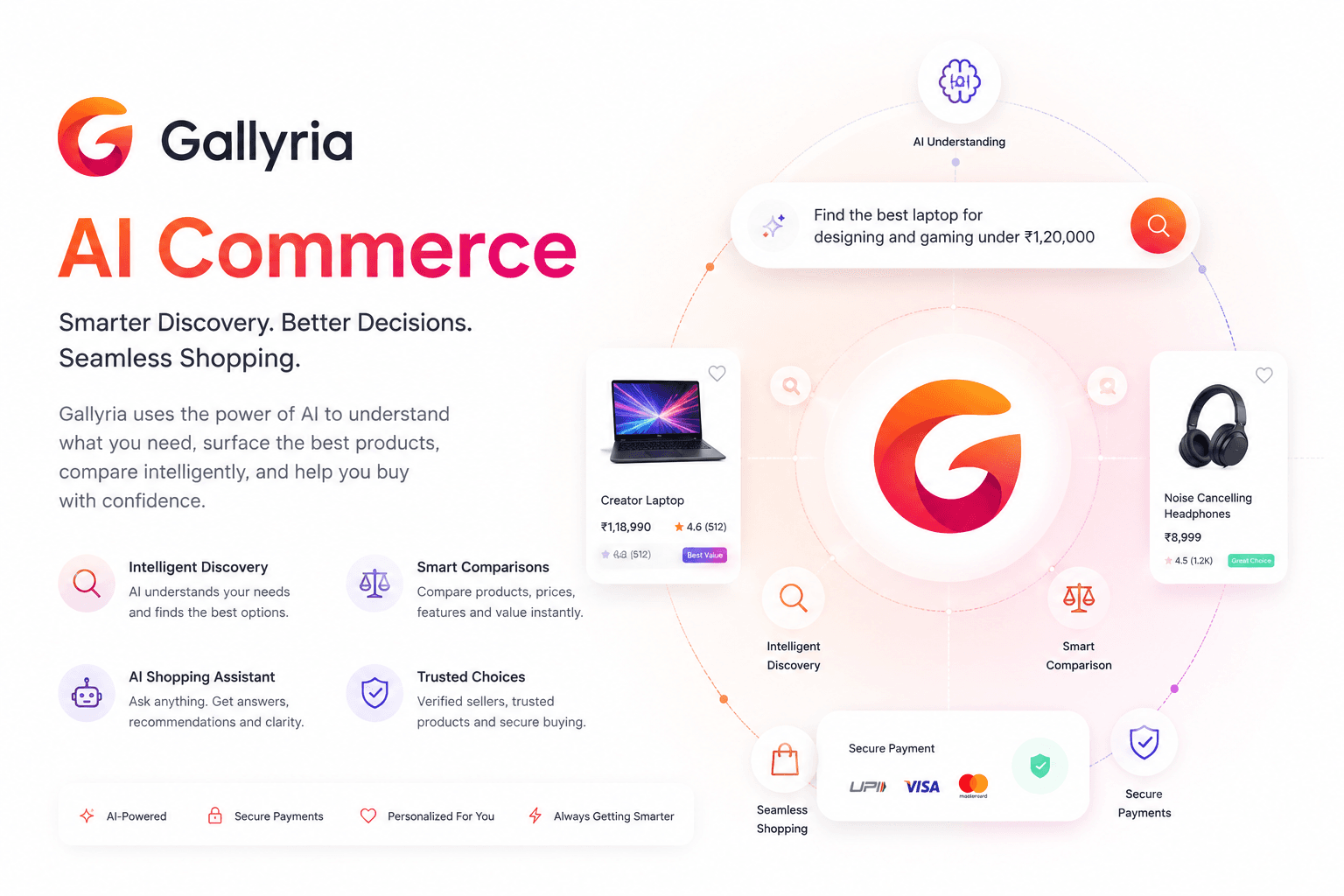

The Future Of Commerce Will Be About Discovery, Trust, And Retention — Not Just Transactions
For most of the internet era, ecommerce has optimized for one thing above all else:
transactions.
The faster platforms could push users from search to checkout, the more successful they became. Entire marketplaces were built around maximizing clicks, advertisements, and conversions.
But something is beginning to change.
As products become more complex, marketplaces become more crowded, and consumer attention becomes more fragmented, the real challenge is no longer simply selling products online.
It is helping people discover the right products, trust the recommendation, and return again when they need something new.
The future of commerce may look less like a marketplace and more like an intelligent relationship.
Discovery is becoming the most important layer in modern commerce.
Today’s platforms overwhelm users with:
- duplicate listings
- aggressive advertising
- sponsored placements
- endless scrolling
- fragmented specifications
People are not struggling because products are unavailable.
They are struggling because there is too much noise.
The future commerce experience will increasingly focus on reducing complexity instead of increasing exposure.
AI systems will help users navigate products through:
- intent
- workflows
- preferences
- tradeoffs
- compatibility
- lifestyle fit
rather than simply ranking whoever paid the most for advertising.
A user may no longer search for:
wireless headphones
Instead, they may ask:
I travel frequently, work in cafés, and need lightweight headphones with excellent noise cancellation and long battery life.
That is not keyword search. That is contextual discovery.
And contextual discovery changes how products are surfaced, compared, and recommended.
This shift also changes how loyalty is built.
Traditional ecommerce platforms built loyalty through:
- discounts
- memberships
- faster shipping
- cashback programs
But AI-native commerce platforms may build loyalty differently.
Users will increasingly return to systems that:
- understand their preferences
- remember their workflows
- reduce decision fatigue
- improve recommendations over time
- simplify comparisons
- help them make better decisions
In many ways, the future shopping experience may begin to resemble the relationship people currently have with:
- Spotify
- Netflix
- YouTube
Not because of entertainment, but because those systems continuously learn preferences and improve discovery.
Commerce is heading in a similar direction.
The platform that best understands a user’s:
- taste
- budget
- priorities
- lifestyle
- tradeoff preferences
may ultimately become the platform they trust most.
Retention in the future may depend less on transactions and more on usefulness.
Most ecommerce apps today become inactive shortly after a purchase.
Future commerce platforms may remain useful continuously through:
- product monitoring
- price tracking
- upgrade recommendations
- compatibility alerts
- maintenance reminders
- replenishment workflows
- ecosystem suggestions
A shopping platform could evolve into a long-term product intelligence companion.
For example:
A user buys a laptop.
Weeks later, the platform recommends:
- compatible monitors
- better chargers
- ergonomic accessories
- upgrade paths
- software workflows
- lower-priced alternatives for secondary devices
The relationship extends beyond checkout.
Commerce becomes ongoing assistance instead of isolated purchases.
Payments themselves may also evolve significantly.
Today, checkout is still surprisingly fragmented:
- payment gateways
- redirects
- OTP flows
- multiple apps
- repeated authentication
But the future payment experience may become increasingly invisible.
As AI systems gain more contextual understanding and trust, purchasing may become more conversational and embedded directly into discovery.
A future interaction may look like this:
Find me the best ergonomic chair under ₹25,000 for long working hours and order the best value option with delivery this weekend.
Search, recommendation, comparison, negotiation, and payment collapse into one continuous flow.
The boundary between discovery and transaction starts disappearing.
Commerce platforms may also become significantly more proactive.
Instead of waiting for users to search, systems may increasingly anticipate needs through:
- product lifecycle understanding
- usage patterns
- seasonal behavior
- maintenance schedules
- compatibility tracking
- ecosystem awareness
A platform may eventually know:
- when a device battery is likely degrading
- when an appliance warranty is expiring
- when an accessory upgrade improves workflow efficiency
- when pricing drops make upgrades worthwhile
Commerce becomes less reactive and more assistive.
Another major shift is that marketplaces themselves may become less important than the intelligence layer sitting above them.
Consumers increasingly care less about:
- where a product is listed
and more about:
- whether it is trustworthy
- fairly priced
- compatible
- valuable
- suitable for their needs
Future commerce systems may aggregate products across:
- marketplaces
- brand websites
- local retailers
- distributors
- affiliate networks
while presenting them through one clean, intelligent experience.
The interface becomes:
- recommendation-first
- understanding-first
- decision-first
instead of listing-first.
Perhaps the biggest transformation is philosophical.
For years, ecommerce platforms optimized for:
- more listings
- more clicks
- more ads
- more browsing time
But the future of commerce may optimize for something very different:
less confusion.
The platforms people trust most may ultimately be the ones that:
- reduce noise
- explain tradeoffs clearly
- simplify decisions
- personalize intelligently
- improve discovery continuously
The future of commerce is not simply about selling more products online.
It is about helping people navigate an increasingly overwhelming world of choices with clarity and confidence.
And that may fundamentally reshape how the internet shops.